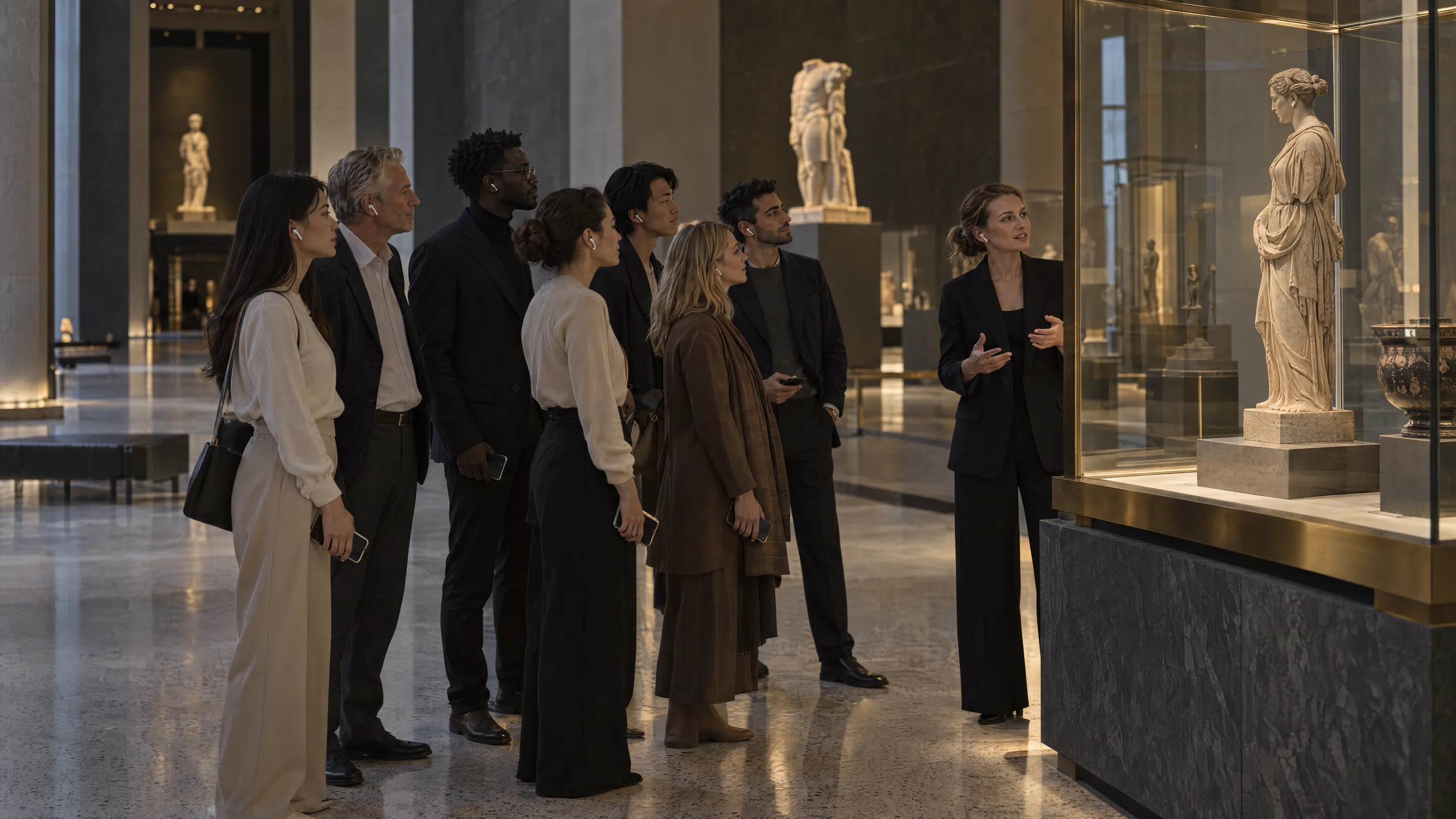
The docent narrates in Korean exactly as always, and visitors hear their own language on their own phone and earphones. Nothing is handed out.
Exhibition narration today
There are already several ways to reach visitors in a foreign language. The one thing missing is the narration a person gives on the spot.
| Current method | Limitation |
|---|---|
| Exhibition app · audio guide | Pre-recorded narration. Visitors listen alone, and whatever the docent says that day is not in it |
| Multilingual interpretive panels | Every added language costs more, and there is only so much wall space in a gallery |
| Assigning a foreign-language docent | For less common languages, there is hardly anyone to hire |
| Renting wireless receivers | There is no translation — it only carries the docent's voice as it is |
| Visitors' own translation apps | They have to chase the docent with a phone in hand, and never look at the works |
How to use it
A small wireless microphone clipped on, phone in a pocket. Narration in Korean. Nothing about the tour changes.
They scan the QR code at the information desk or the gallery entrance with their own phone and pick a language. No installing, no signing up.
They hear their own language through their own earphones, with their eyes on the works. Subtitles appear alongside.
The only new equipment in the gallery is one small wireless router. There is no procedure for handing out receivers and then collecting, charging, disinfecting and tracking lost ones.
The wording of the narration
Send us the narration script and we translate it in advance; the museum reviews it, edits it and signs it off. What reaches visitors is wording the museum approved. Planned for the November 2026 release.
| Narration with a script | The translation the museum signed off on is delivered word for word |
|---|---|
| What the docent says on the spot | Whatever is said on the spot is carried live, kept separate from the signed-off script rather than mixed into it |
| Linking to object numbers | Museums that already run an audio guide have numbers on the objects. How to reuse those numbers is worked out with each museum's own operation in mind |
Where it is used
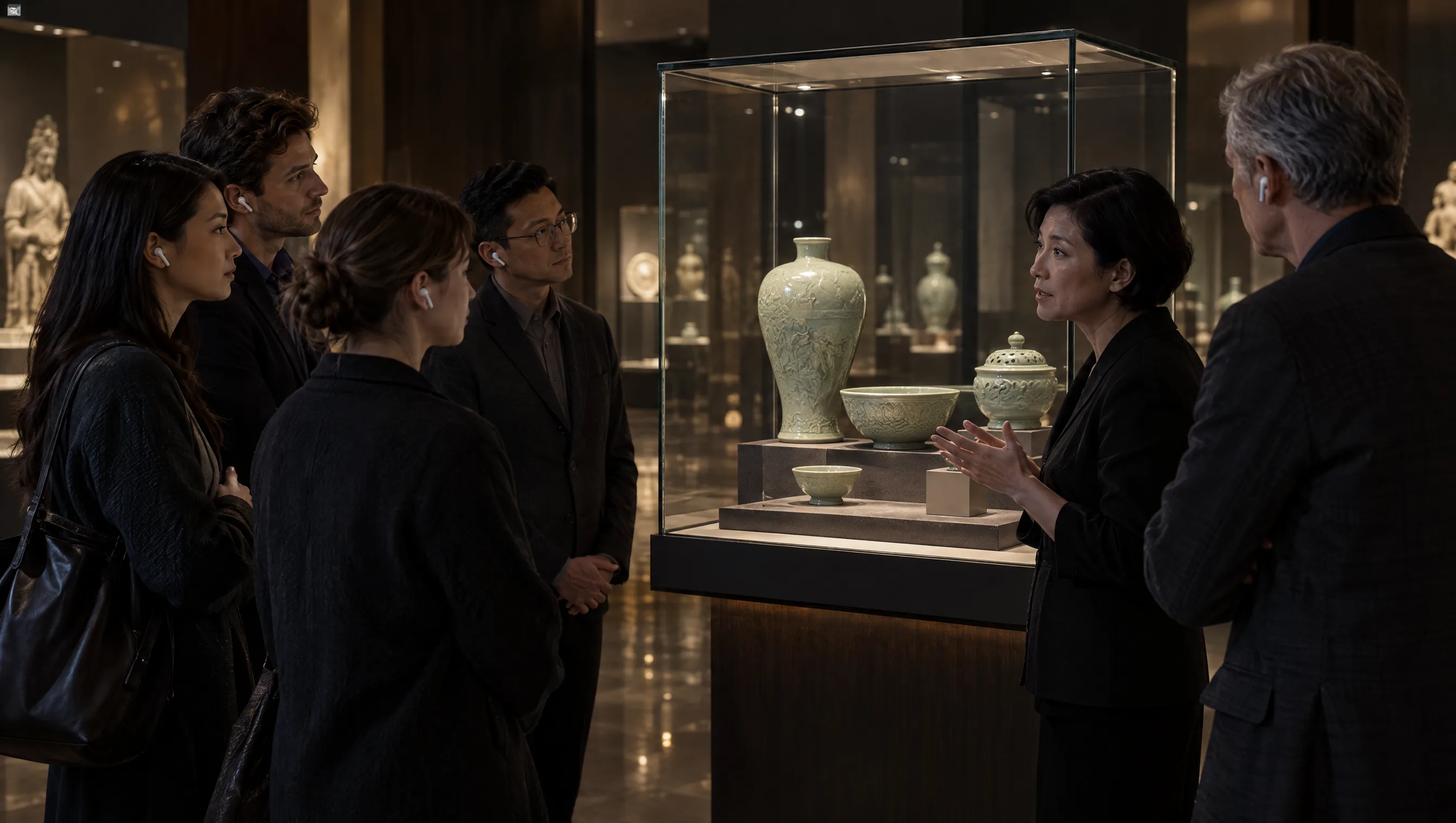
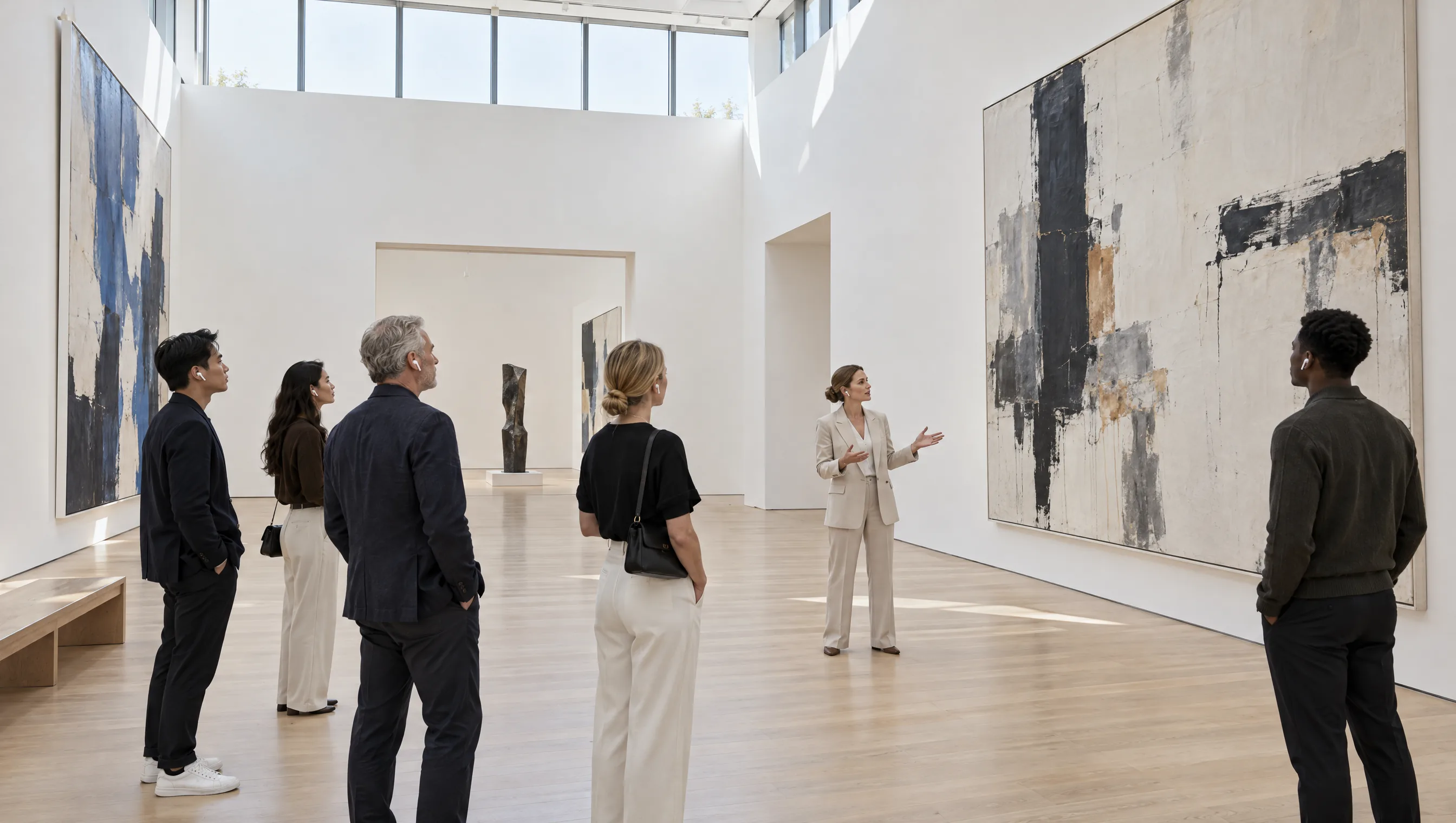



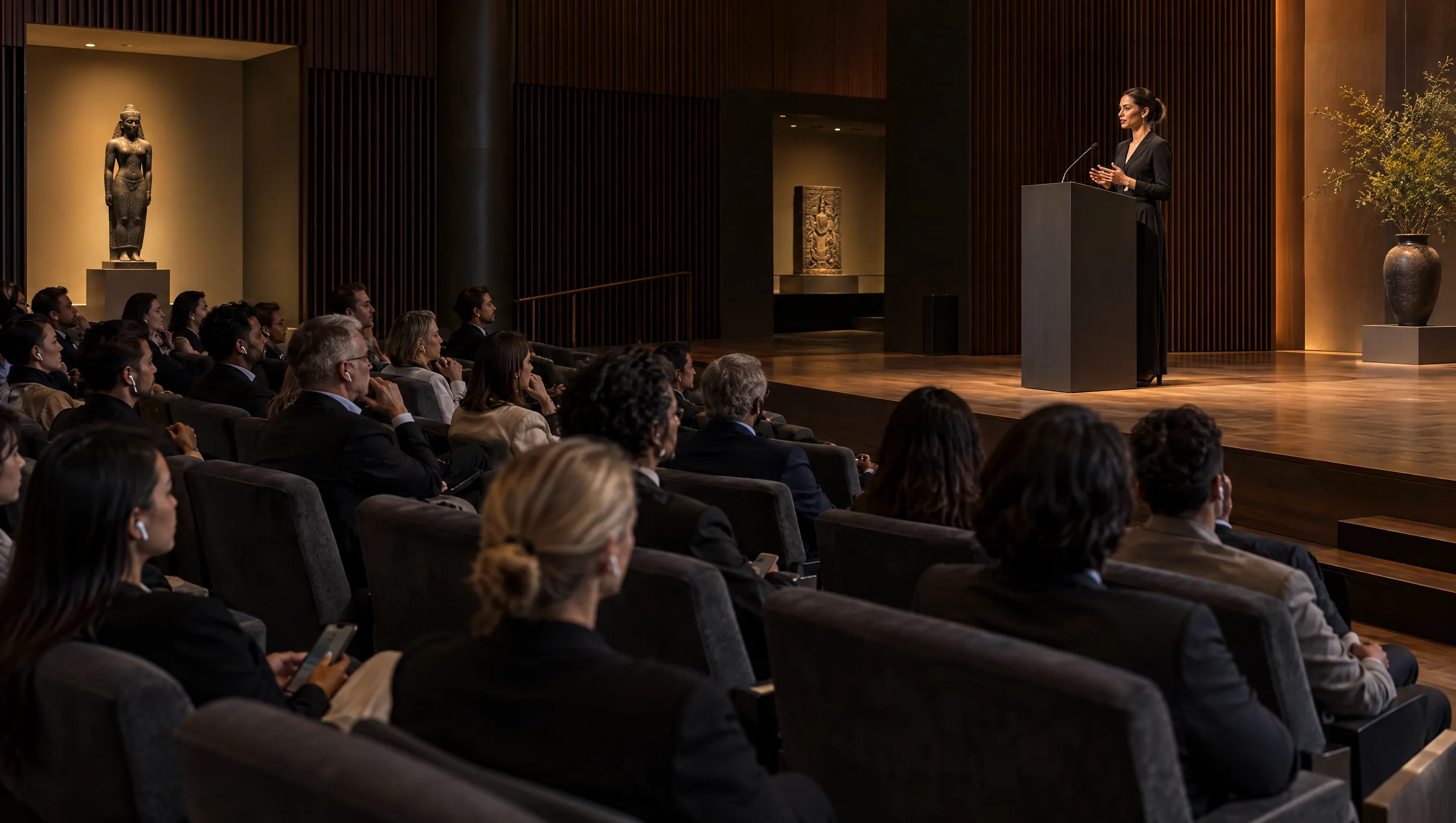
Permanent gallery — a small group at the vitrine
Outdoor sculpture garden — narration on the move
A staged video.
| Group size | 3–5 people on the docent's phone hotspot · beyond that, a small router with internet (20–40 people when connected through a router, depending on conditions) |
|---|---|
| Connection | The docent and the visitors join the same Wi-Fi (either the docent's phone hotspot or a small router). A visitor listens to one narration at a time |
| Languages | Most languages work without internet · a few, such as Nepali and Burmese, need internet on the docent's phone |
| What visitors need | Their own phone and earphones. No app to install, no account to create |
| Installation in the gallery | One small wireless router. Nothing new is attached to the objects or the walls |
| Fee | Pricing on request, based on scale · 30-day free pilot |
Fee
Every museum is different. Those with a budget line for foreign-language interpretation spend more than ten times what those without it spend. That is why we do not post a price list. Tell us the seven things below and we will send a figure built on that basis.
| 1 | How do you handle foreign-language interpretation today? (not at all · recorded guide · interpreter · foreign-language docent) |
|---|---|
| 2 | What does that cost per year? |
| 3 | Do you charge visitors a guide rental fee? If so, how much? |
| 4 | How many docent tours run per day, and how many people join each? |
| 5 | What share of your visitors are from abroad, and which countries dominate? |
| 6 | Which budget line does this sit under? (operations · exhibitions · education · none) |
| 7 | Which department makes the decision to adopt it? |
The figure assumes continuous operation. We do not bill by the minute or by the session — a permanent exhibition cannot be counted in minutes.
Frequently asked questions
No. An exhibition app is for a visitor listening alone to pre-recorded narration; RayTok carries a docent's live narration to a group in several languages. They are for different situations.
One small wireless router. Nothing is attached to the objects or the walls. The QR code visitors scan can sit at the information desk or on the entrance signboard.
Hangul (HWPX), Word (DOCX) and plain text all work. We send the translation back for the museum to review, edit and sign off. Planned for the November 2026 release.
They can read the subtitles on screen. Some museums keep spare earphones at the information desk.
There is no structural limit on how many languages run at the same time. Each visitor receives the language they chose. Adding languages adds nothing to install in the gallery.
Visitors do not sign up. No contact details are collected and no audio is stored.
Yes. You can run it for the exhibition's dates and stop there. Running the permanent collection and special exhibitions separately is fine too.
Pick one special exhibition or one gallery, use it for 30 days and decide from there. Email us your institution's name and how your docent tours run.
Email: raytok.dany@gmail.com · Phone: 1800-6825