
An interpretation tool for safety training and work instructions for foreign workers. After the training, a record remains of who listened and for how long.
Why now
Under the amendment to Korea's Occupational Safety and Health Act promulgated on July 7, 2026 (Act No. 21853), employers must have the foreign workers they hire complete safety and health training.
| Foreign workers | All workers | |
|---|---|---|
| Industrial accident rate (2022) | 0.98% | 0.65% |
| Fatalities per 10,000 workers | 1.28 | 1.10 |
| Foreign nationals employed in Korea | 1,109,000 people (May 2025, Statistics Korea) | |
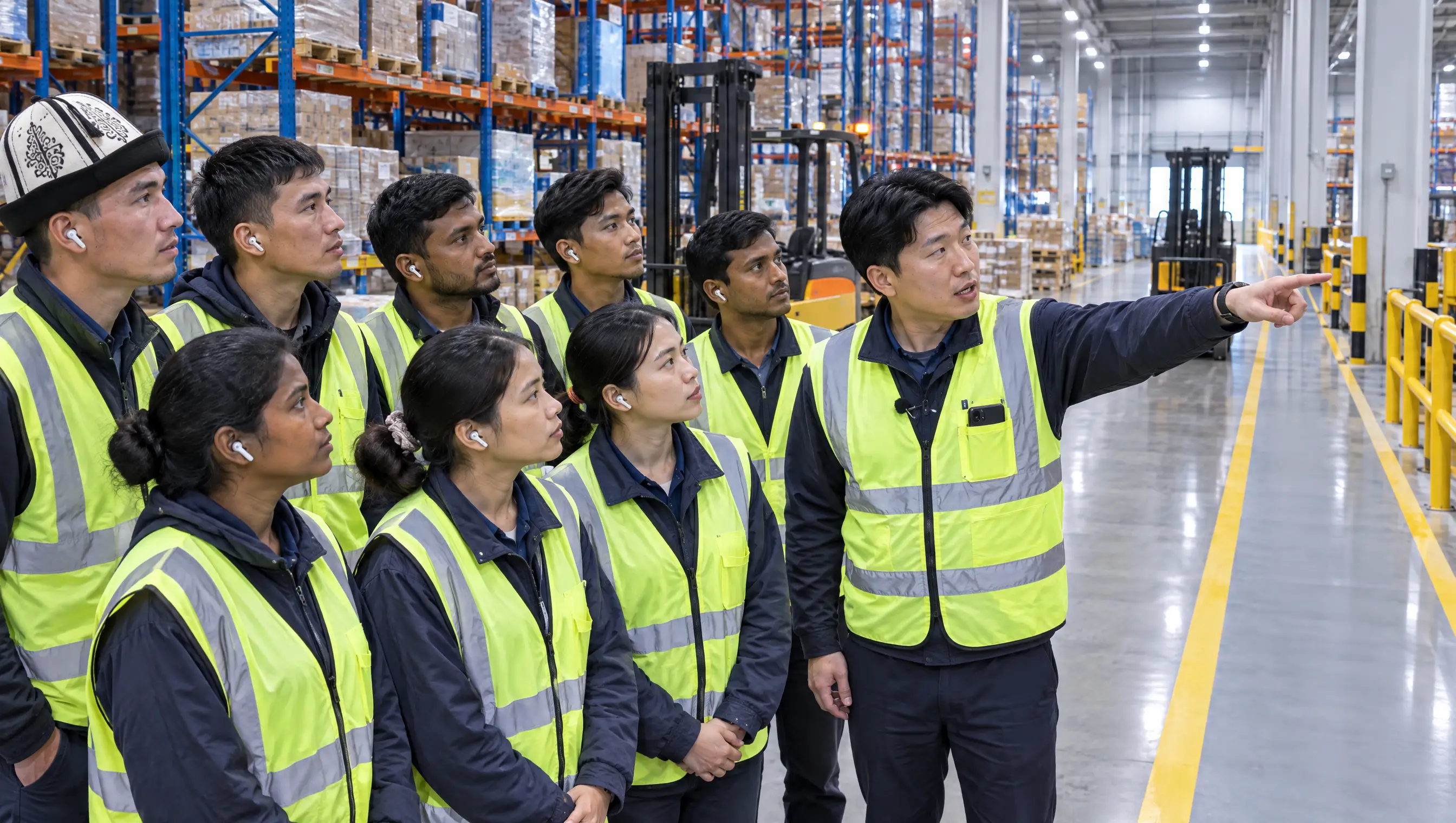
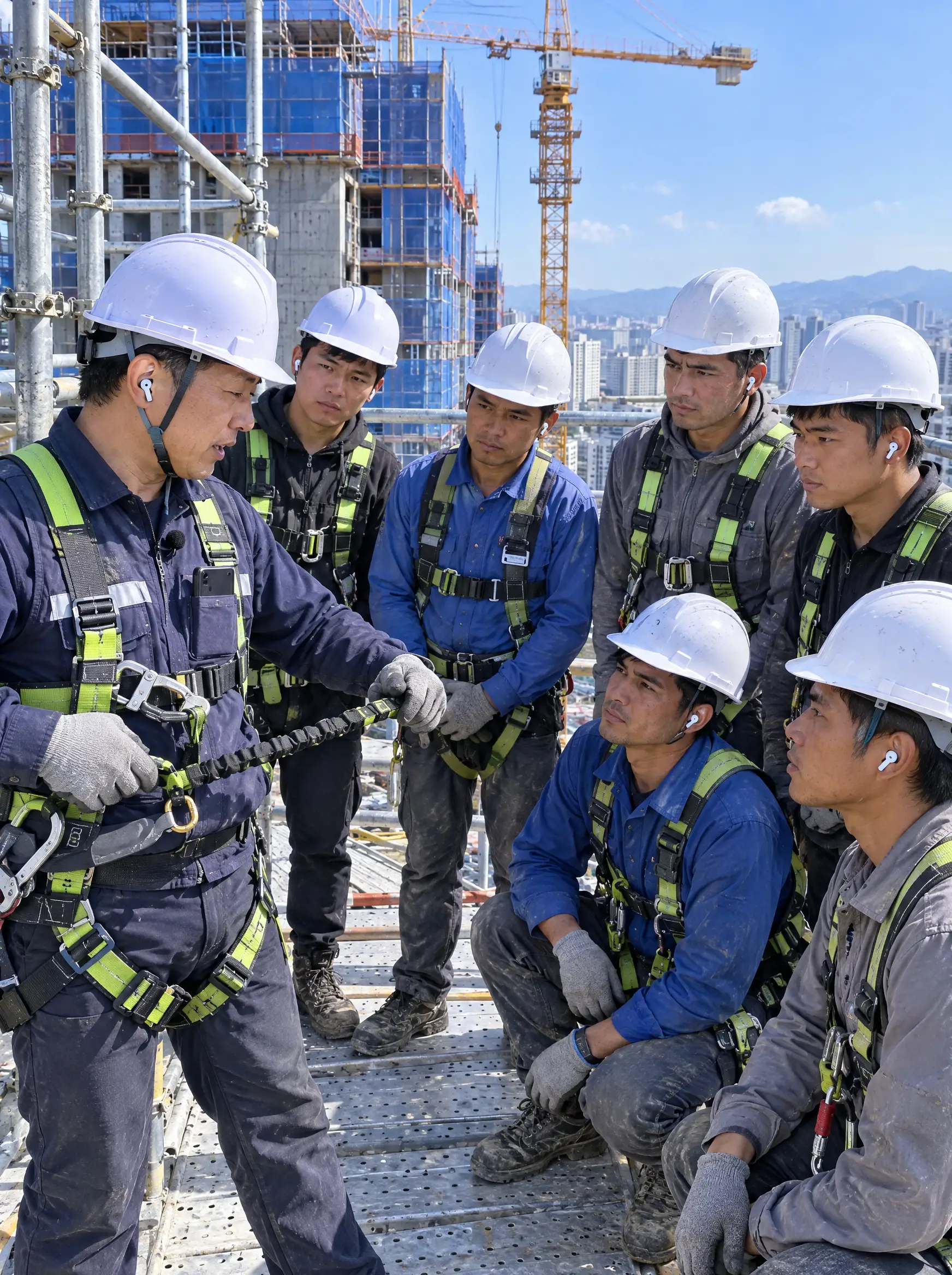
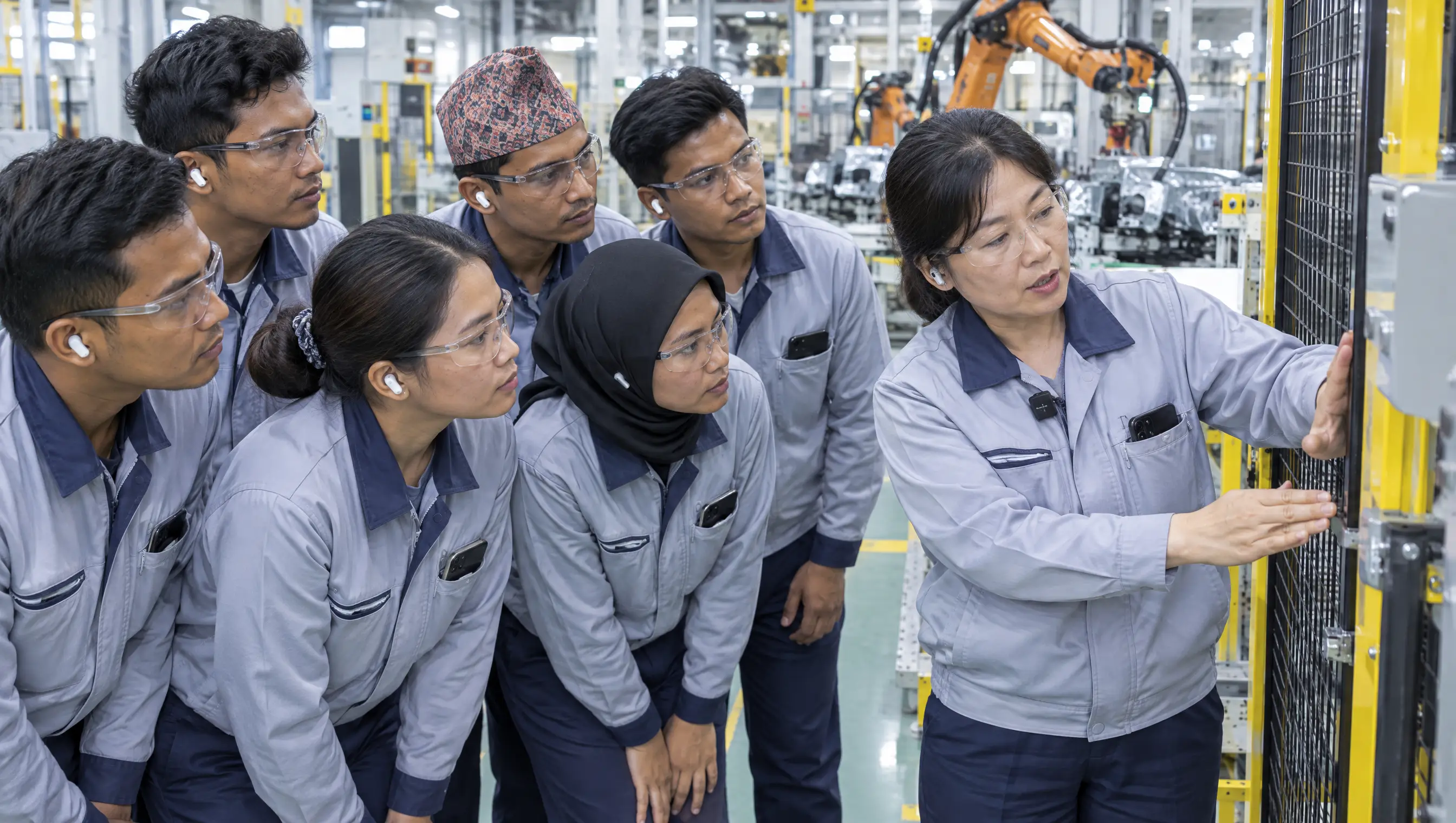
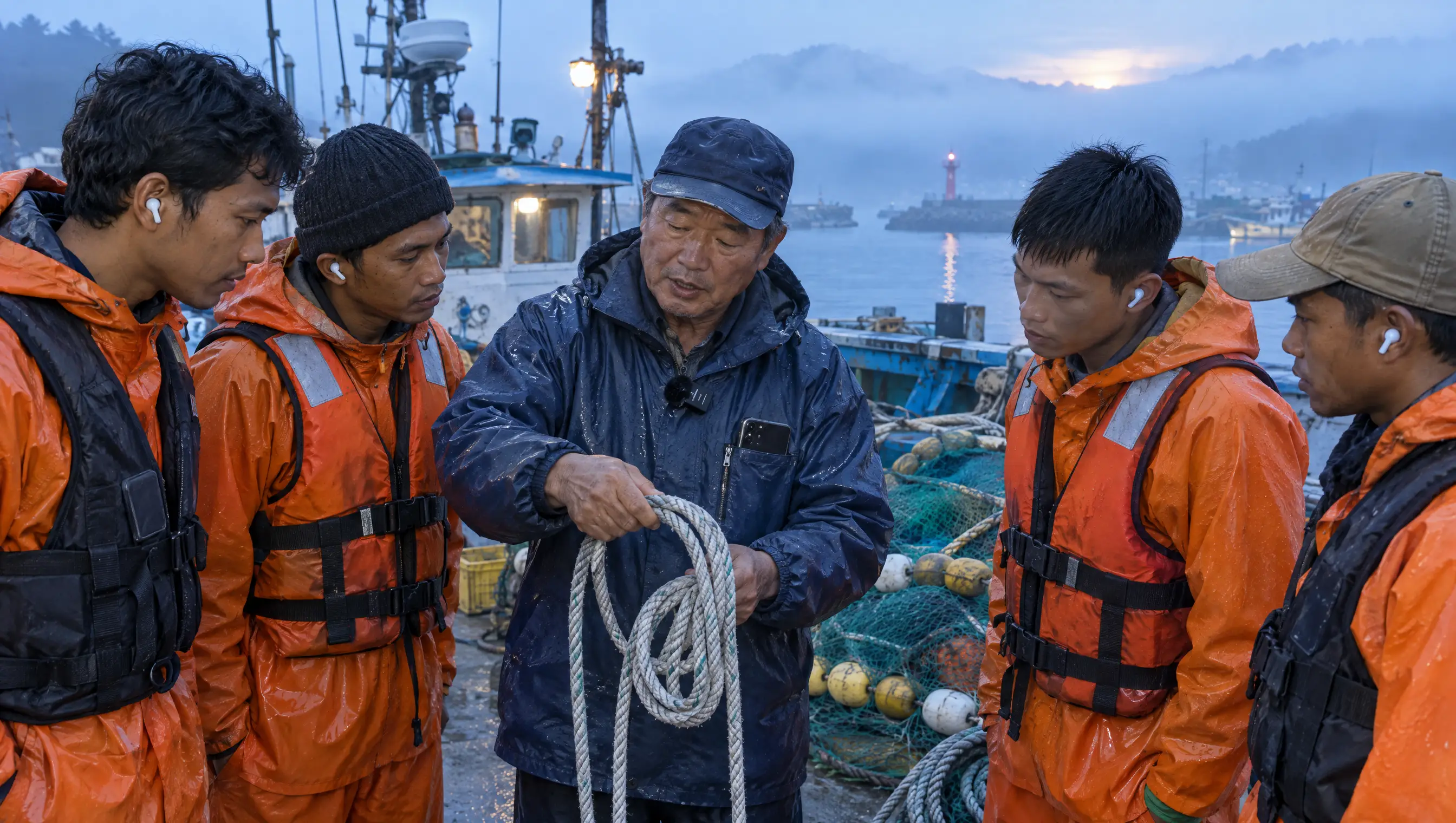
Workers from Vietnam, Nepal, Cambodia, Myanmar and Uzbekistan are together on one site. Even if the materials are translated, the message does not get through when the lecture is in Korean.
How to use it
A wireless microphone on the chest, the phone in a pocket. Just speak Korean.
Scan the QR code with your own phone and choose a language. No installation, no sign-up, no personal information to enter.
Listen through your own earphones and read the captions. Eyes stay on the instructor and the work site.
Shipyard — instruction not to pass under the scaffolding
Logistics warehouse — forklift lanes and pedestrian walkways
Staged footage. Watch with sound on.
Anywhere
Workers' phones do not need internet. Some languages, such as Nepali and Burmese, require internet on the instructor's phone.


| People per session | 3–5 people on the instructor's phone hotspot · an internet-connected portable router for more (30–50 with 1 router, based on router specs · increases with additional routers · actual capacity verified on-site in trial) |
|---|---|
| Connection | The instructor and workers join the same Wi-Fi (either the instructor's phone hotspot or a small router). A worker listens to one instructor at a time |
| Languages | Most languages work without internet · some languages, such as Nepali, Burmese and Khmer, require internet on the instructor's phone |
| Preparation | Before training, download just the languages you need to the instructor's phone once, on office Wi-Fi |
| Records | Number of attendees, number per language, listening time per person, and the original and translated text of the lecture. Stored only on the instructor's phone; audio is not stored |
| Fee | Pricing on request, based on scale · 30-day free trial |
Pricing
Contracts are per site, regardless of the number of workers, languages or sessions. Two instructor codes are included. Tell us how many sites and which languages you need and we will send a quote.
| Item | Details |
|---|---|
| Contract unit | One site (any number of workers · 2 instructor codes included) |
| Additional instructor code | Add as many as needed |
| Training package | For training institutions and associations (1 instructor code) |
| Annual prepayment | Discount applied |
| Portable router (needed for more than 5 people) | Sold separately |
Frequently asked questions
Yes. They listen through their own earphones. When listening in a browser, the screen must stay on for the audio to continue. At noisy sites, read the captions as well.
Many Wi-Fi networks block device-to-device communication for security reasons. We recommend using a separate portable router with internet access (an LTE router or a wired connection). It must be a router that assigns addresses to connected devices itself, not a Wi-Fi extender (repeater).
When there is internet, the translation server translates into that language. Only when there is no internet is the text shown in another language the listener can read. For example, Nepali is shown in Hindi, Lao in Thai and Mongolian in Russian, and the screen says so, for example "No Nepali model; showing Hindi instead." For languages with no substitute, such as Uzbek, Khmer, Burmese and Sinhala, the screen says "This language requires internet."
For up to 3–5 people, the instructor's phone hotspot works. For more, a portable router with internet access is needed. When the hotspot is used, the workers' phones also use the instructor's mobile data line. While the instructor's phone is connected to a router's Wi-Fi, its hotspot cannot be turned on at the same time. If you use a router, the workers connect to the same router.
Workers' phones do not need internet. For most languages, the instructor's phone also works without internet. The instructor's phone needs to reach LTE or Wi-Fi only when using some languages, such as Nepali and Burmese. We check this together at your site before you start.
It is machine translation, so errors are possible. For important safety instructions, use demonstrations and visual materials as well. The original and the translation are shown together.
RayTok is an interpretation tool, not a safety and health training institution. Responsibility for conducting the training, documenting it and managing completion lies with the training institution and the employer. The records are material that supports that documentation.
Open the app and press Start. A 30-minute walkthrough is enough.
Even 5 foreign workers is fine. Email us your workplace and number of workers, and we will explain how the trial works.
Email: raytok.dany@gmail.com